Hubble reveals an extreme young star cluster where massive stars and energetic radiation illuminate a region of intense stellar birth.
Credit: ESA/Hubble (M. Kornmesser & L. L. Christensen)
The episode goes behind the scenes to explain how scientific Hubble data are processed and transformed into informative colour images.
Credit: ESA/Hubble (M. Kornmesser & L. L. Christensen)
A detailed Hubble image of spiral galaxy Messier 74 reveals sweeping arms, glowing hydrogen regions and populations of young blue stars.
Credit: ESA/Hubble (M. Kornmesser & L. L. Christensen)
Hubble studies the hazy atmosphere of a hot giant exoplanet, revealing how high-altitude particles can obscure the planet's deeper atmospheric layers.
Credit: ESA/Hubble (M. Kornmesser & L. L. Christensen)
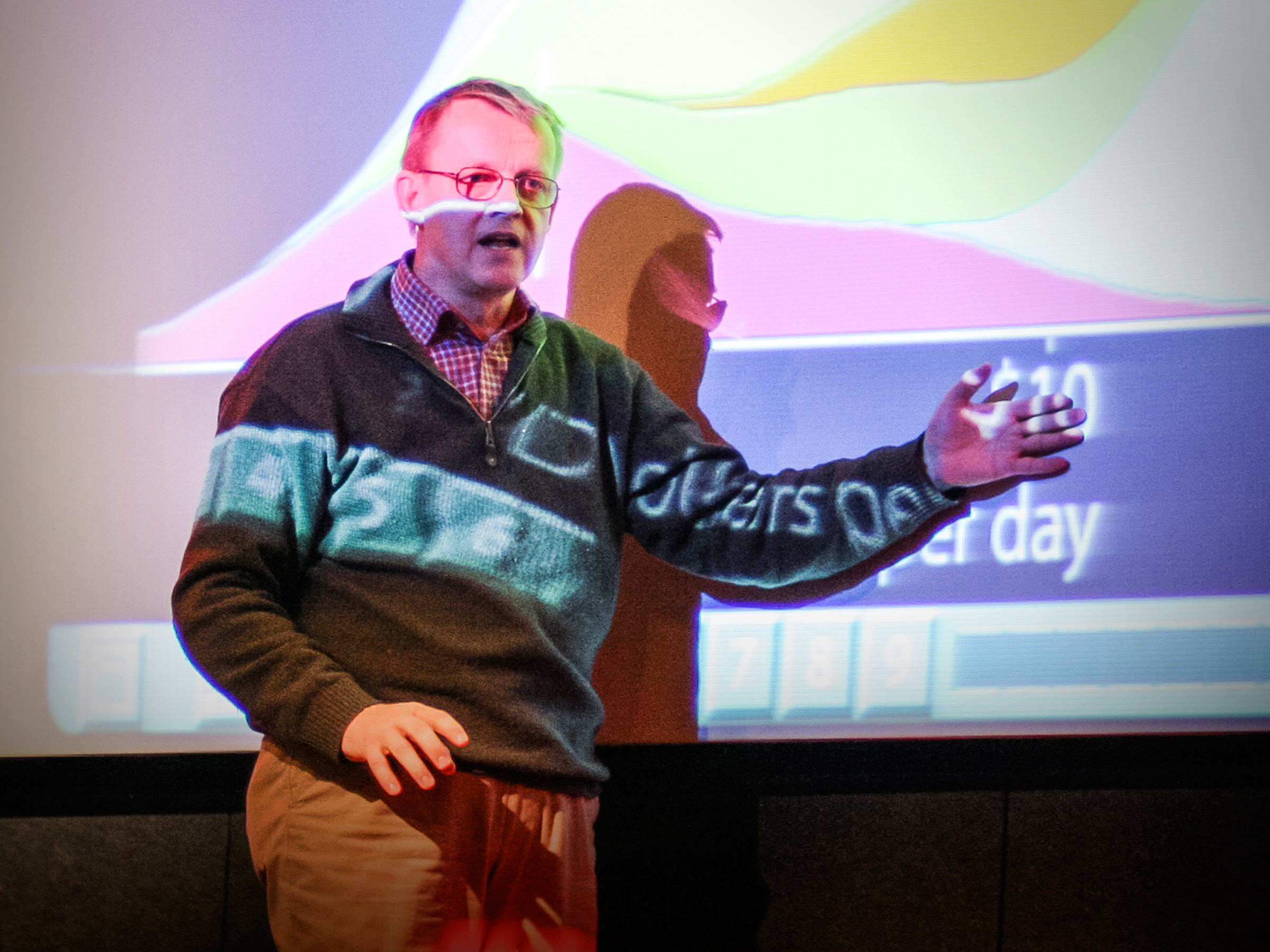
You've never seen data presented like this. With the drama and urgency of a sportscaster, statistics guru Hans Rosling debunks myths about the so-called "developing world."
The giant elliptical galaxy NGC 1132 is presented as a cosmic fossil, likely formed through the merger of an entire group of galaxies.
Credit: ESA/Hubble (M. Kornmesser & L. L. Christensen), Klaus Dolag (MPA, Garching), CXC/Penn State University/G. Garmire, et al.
In a robot lab at TEDGlobal, Raffaello D'Andrea demos his flying quadcopters: robots that think like athletes, solving physical problems with algorithms that help them learn. In a series of nifty demos, D'Andrea show drones that play catch, balance and make decisions together -- and watch out for an I-want-this-now demo of Kinect-controlled quads.
Hubble detects methane in the atmosphere of an extrasolar planet, the first organic molecule identified on a planet orbiting another star.
Credit: ESA/Hubble (M. Kornmesser & L. L. Christensen)
Hubble observations provide evidence for an intermediate-mass black hole hidden inside the massive globular cluster Omega Centauri.
Credit: ESA/Hubble (M. Kornmesser & L. L. Christensen), R. Gendler
Hubble captures interacting and merging galaxies, showing how gravitational encounters distort their shapes and trigger intense star formation.
Credit: ESA/Hubble (M. Kornmesser & L. L. Christensen)
The first Eyes on the Skies special reviews how telescopes transformed humanity's view of the heavens and opened new windows on the Universe.
Credit: ESA/Hubble (M. Kornmesser & L. L. Christensen)
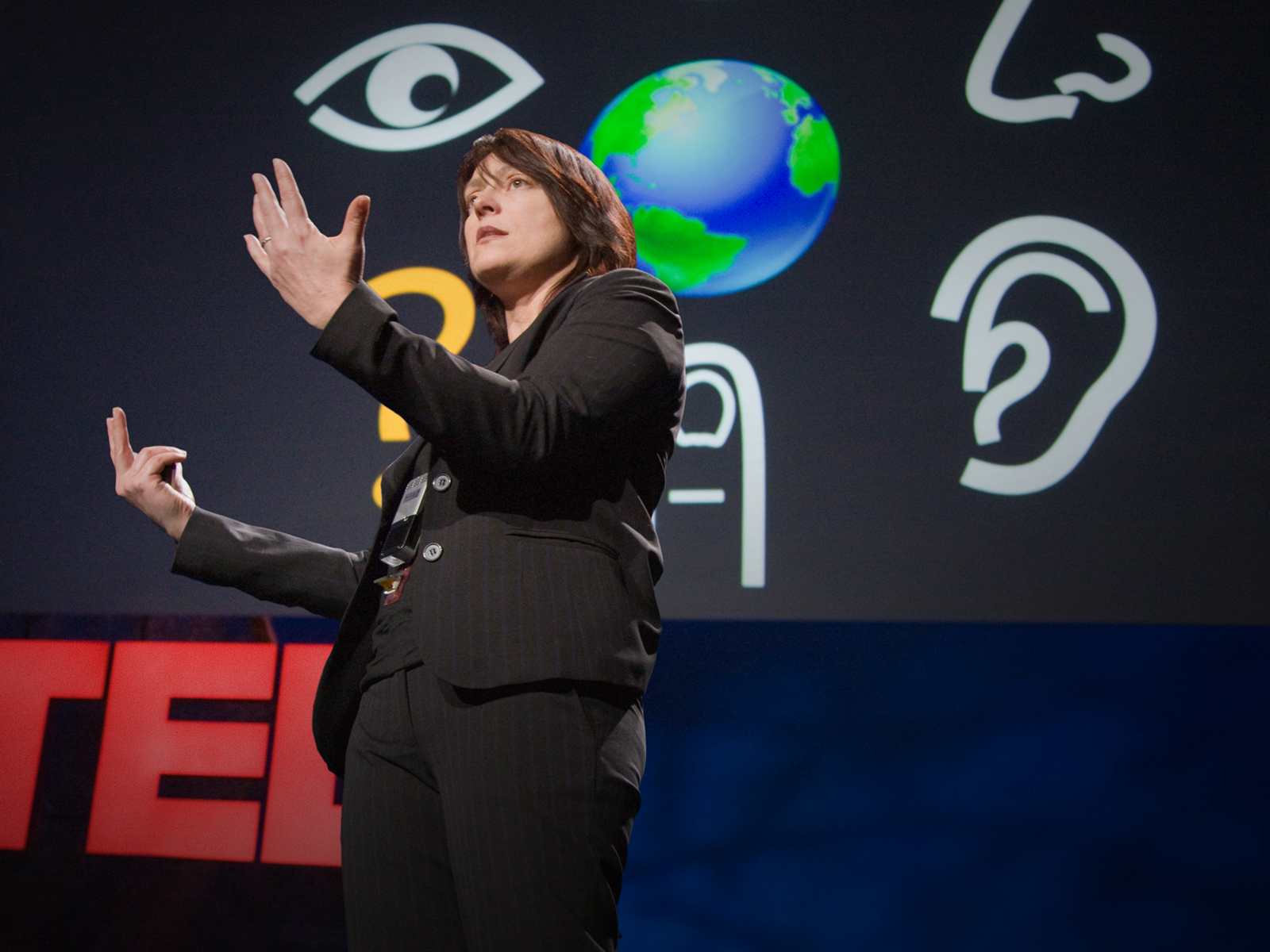
This demo -- from Pattie Maes' lab at MIT, spearheaded by Pranav Mistry -- was the buzz of TED. It's a wearable device with a projector that paves the way for profound interaction with our environment. Imagine "Minority Report" and then some.