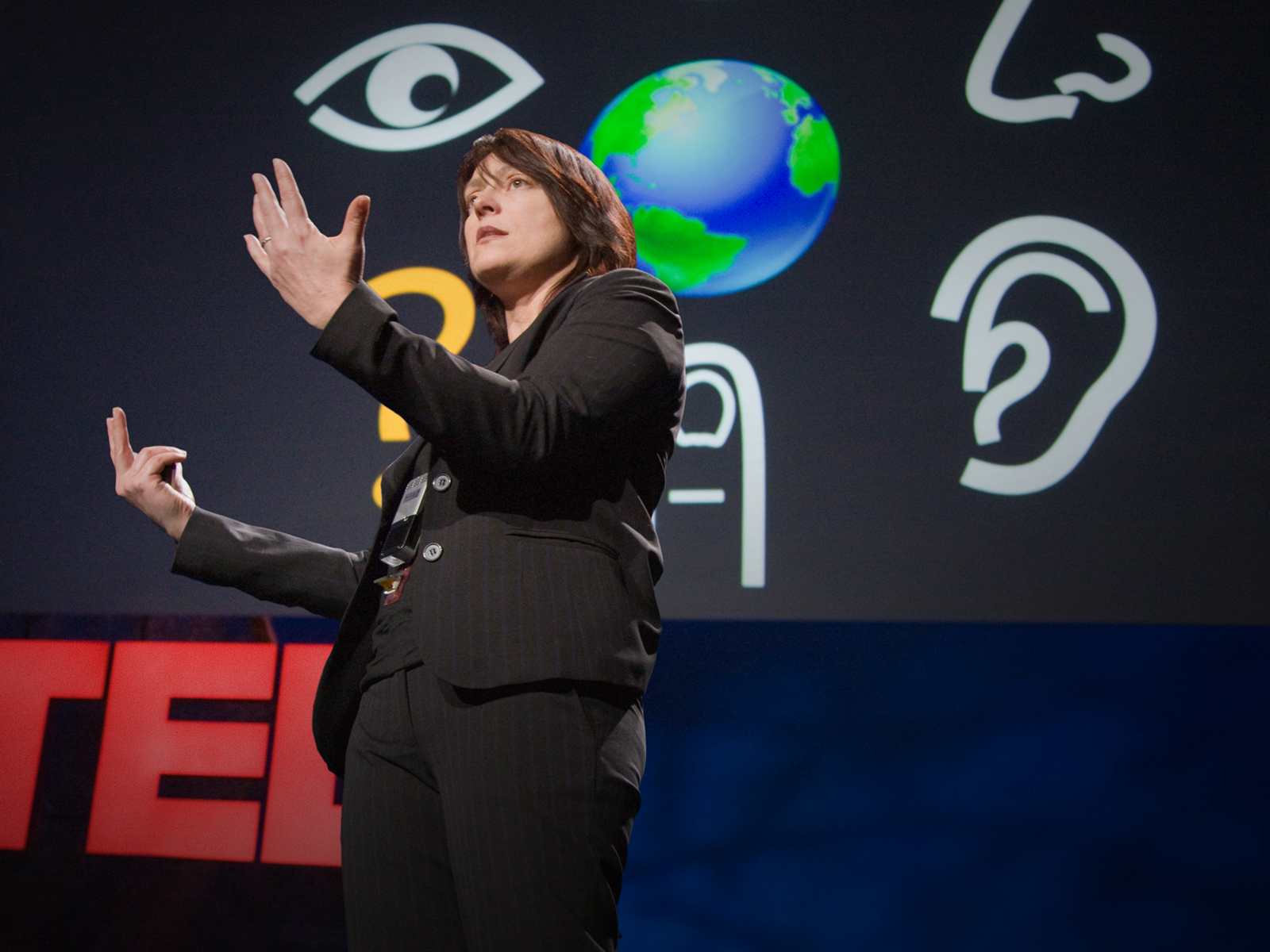
This demo -- from Pattie Maes' lab at MIT, spearheaded by Pranav Mistry -- was the buzz of TED. It's a wearable device with a projector that paves the way for profound interaction with our environment. Imagine "Minority Report" and then some.
Hubble examines energetic activity and powerful magnetic phenomena associated with an erupting galaxy and its extreme central environment.
Credit: ESA/Hubble (M. Kornmesser & L. L. Christensen)
Anthropologist Helen Fisher takes on a tricky topic – love – and explains its evolution, its biochemical foundations and its social importance. She closes with a warning about the potential disaster inherent in antidepressant abuse.
The episode explores why larger telescopes collect more light, resolve finer detail and enable astronomers to study fainter and more distant objects.
Credit: ESA/Hubble (M. Kornmesser & L. L. Christensen)
Don't make people pay for music, says Amanda Palmer: Let them. In a passionate talk that begins in her days as a street performer (drop a dollar in the hat for the Eight-Foot Bride!), she examines the new relationship between artist and fan.
Astronomical discoveries depend on advances in optics, detectors, computers and engineering that continually improve telescope performance.
Credit: ESA/Hubble (M. Kornmesser & L. L. Christensen)
The episode traces astronomy's transition from photographic plates to electronic detectors and the digital imaging technologies used by modern telescopes.
Credit: ESA/Hubble (M. Kornmesser & L. L. Christensen)
Benjamin Zander has two infectious passions: classical music, and helping us all realize our untapped love for it -- and by extension, our untapped love for all new possibilities, new experiences, new connections.
Hubble directly images a planet orbiting the nearby star Fomalhaut, offering rare visual evidence of a world beyond the Solar System.
Credit: ESA/Hubble (M. Kornmesser & L. L. Christensen)
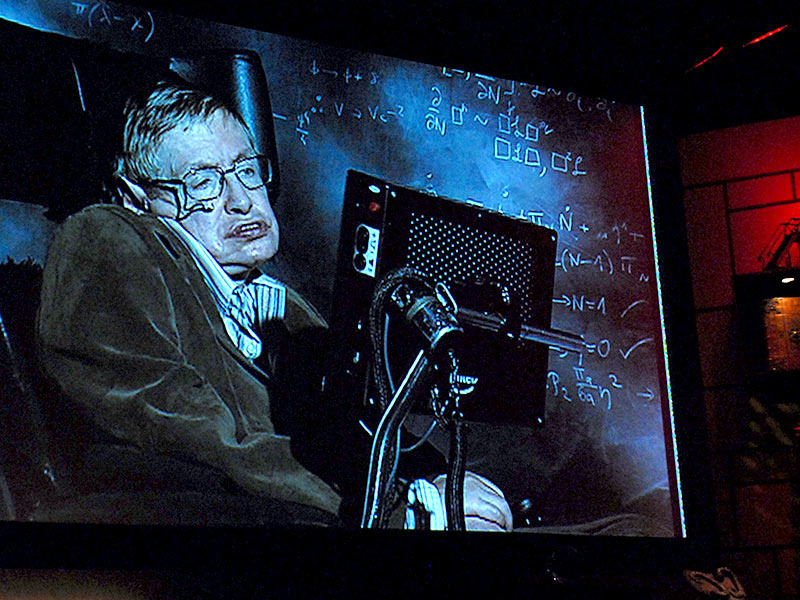
In keeping with the theme of TED2008, professor Stephen Hawking asks some Big Questions about our universe -- How did the universe begin? How did life begin? Are we alone? -- and discusses how we might go about answering them.
Astronomy extends beyond visible light, using radio, infrared, ultraviolet, X-ray and gamma-ray observations to reveal the otherwise invisible Universe.
Credit: ESA/Hubble (M. Kornmesser & L. L. Christensen)