The episode traces astronomy's transition from photographic plates to electronic detectors and the digital imaging technologies used by modern telescopes.
Credit: ESA/Hubble (M. Kornmesser & L. L. Christensen)
Hubble directly images a planet orbiting the nearby star Fomalhaut, offering rare visual evidence of a world beyond the Solar System.
Credit: ESA/Hubble (M. Kornmesser & L. L. Christensen)
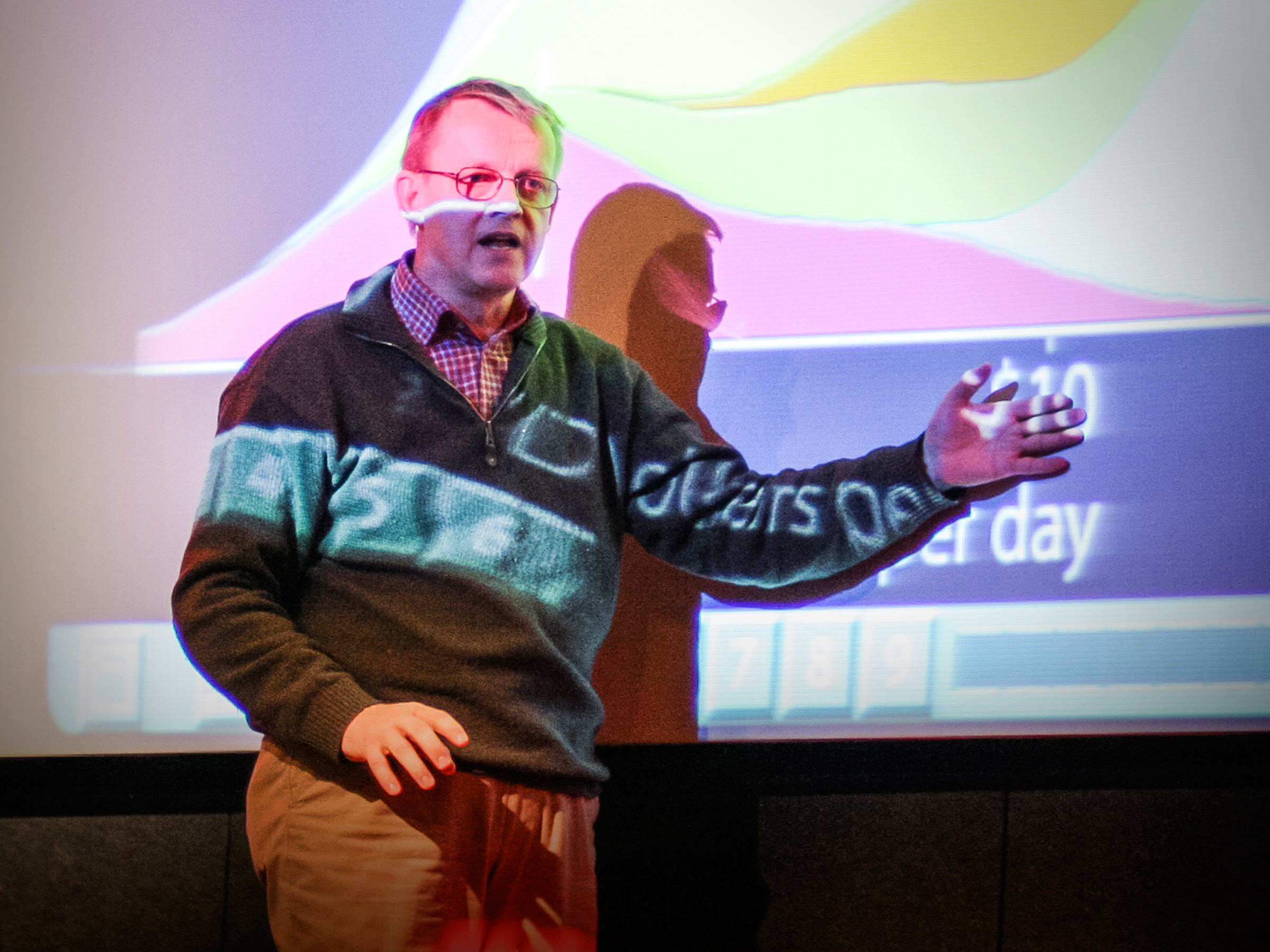
You've never seen data presented like this. With the drama and urgency of a sportscaster, statistics guru Hans Rosling debunks myths about the so-called "developing world."
Astronomy extends beyond visible light, using radio, infrared, ultraviolet, X-ray and gamma-ray observations to reveal the otherwise invisible Universe.
Credit: ESA/Hubble (M. Kornmesser & L. L. Christensen)
This episode explains the scientific advantages of placing telescopes above Earth's atmosphere and surveys the achievements of space observatories.
Credit: ESA/Hubble (M. Kornmesser & L. L. Christensen)
In a robot lab at TEDGlobal, Raffaello D'Andrea demos his flying quadcopters: robots that think like athletes, solving physical problems with algorithms that help them learn. In a series of nifty demos, D'Andrea show drones that play catch, balance and make decisions together -- and watch out for an I-want-this-now demo of Kinect-controlled quads.
The final Eyes on the Skies chapter looks ahead to future ground-based telescopes and space observatories designed to explore new cosmic frontiers.
Credit: ESA/Hubble (M. Kornmesser & L. L. Christensen)
A deep Hubble image of the unusual spiral galaxy NGC 4921 reveals fine structure and a rich background of distant galaxies.
Credit: ESA/Hubble (M. Kornmesser & L. L. Christensen)
Hubble's observations of planets, moons and small bodies show how the telescope has expanded knowledge of the Solar System.
Credit: ESA/Hubble (M. Kornmesser, Colleen Sharkey & Lars Lindberg Christensen)
Astronauts prepare for Hubble's fifth and final servicing mission, involving demanding spacewalks to repair and upgrade the telescope.
Credit: ESA/Hubble (M. Kornmesser, Lars Lindberg Christensen & Colleen Sharkey)
The episode follows the successful final servicing mission that repaired and upgraded Hubble, extending the observatory's scientific life.
Credit: ESA/Hubble (M. Kornmesser, Colleen Sharkey & Lars Lindberg Christensen)
This demo -- from Pattie Maes' lab at MIT, spearheaded by Pranav Mistry -- was the buzz of TED. It's a wearable device with a projector that paves the way for profound interaction with our environment. Imagine "Minority Report" and then some.