We believe we should work hard in order to be happy, but could we be thinking about things backwards? In this fast-moving and very funny talk, psychologist Shawn Achor argues that, actually, happiness inspires us to be more productive.
Hubble studies the hazy atmosphere of a hot giant exoplanet, revealing how high-altitude particles can obscure the planet's deeper atmospheric layers.
Credit: ESA/Hubble (M. Kornmesser & L. L. Christensen)
Dan Gilbert, author of "Stumbling on Happiness," challenges the idea that we’ll be miserable if we don’t get what we want. Our "psychological immune system" lets us feel truly happy even when things don’t go as planned.
The giant elliptical galaxy NGC 1132 is presented as a cosmic fossil, likely formed through the merger of an entire group of galaxies.
Credit: ESA/Hubble (M. Kornmesser & L. L. Christensen), Klaus Dolag (MPA, Garching), CXC/Penn State University/G. Garmire, et al.
In this highly personal talk from TEDMED, magician and stuntman David Blaine describes what it took to hold his breath underwater for 17 minutes -- a world record (only two minutes shorter than this entire talk!) -- and what his often death-defying work means to him. Warning: do NOT try this at home.
Hubble detects methane in the atmosphere of an extrasolar planet, the first organic molecule identified on a planet orbiting another star.
Credit: ESA/Hubble (M. Kornmesser & L. L. Christensen)
David Gallo shows jaw-dropping footage of amazing sea creatures, including a color-shifting cuttlefish, a perfectly camouflaged octopus, and a Times Square's worth of neon light displays from fish who live in the blackest depths of the ocean. This short talk celebrates the pioneering work of ocean explorers like Edith Widder and Roger Hanlon.
Hubble observations provide evidence for an intermediate-mass black hole hidden inside the massive globular cluster Omega Centauri.
Credit: ESA/Hubble (M. Kornmesser & L. L. Christensen), R. Gendler
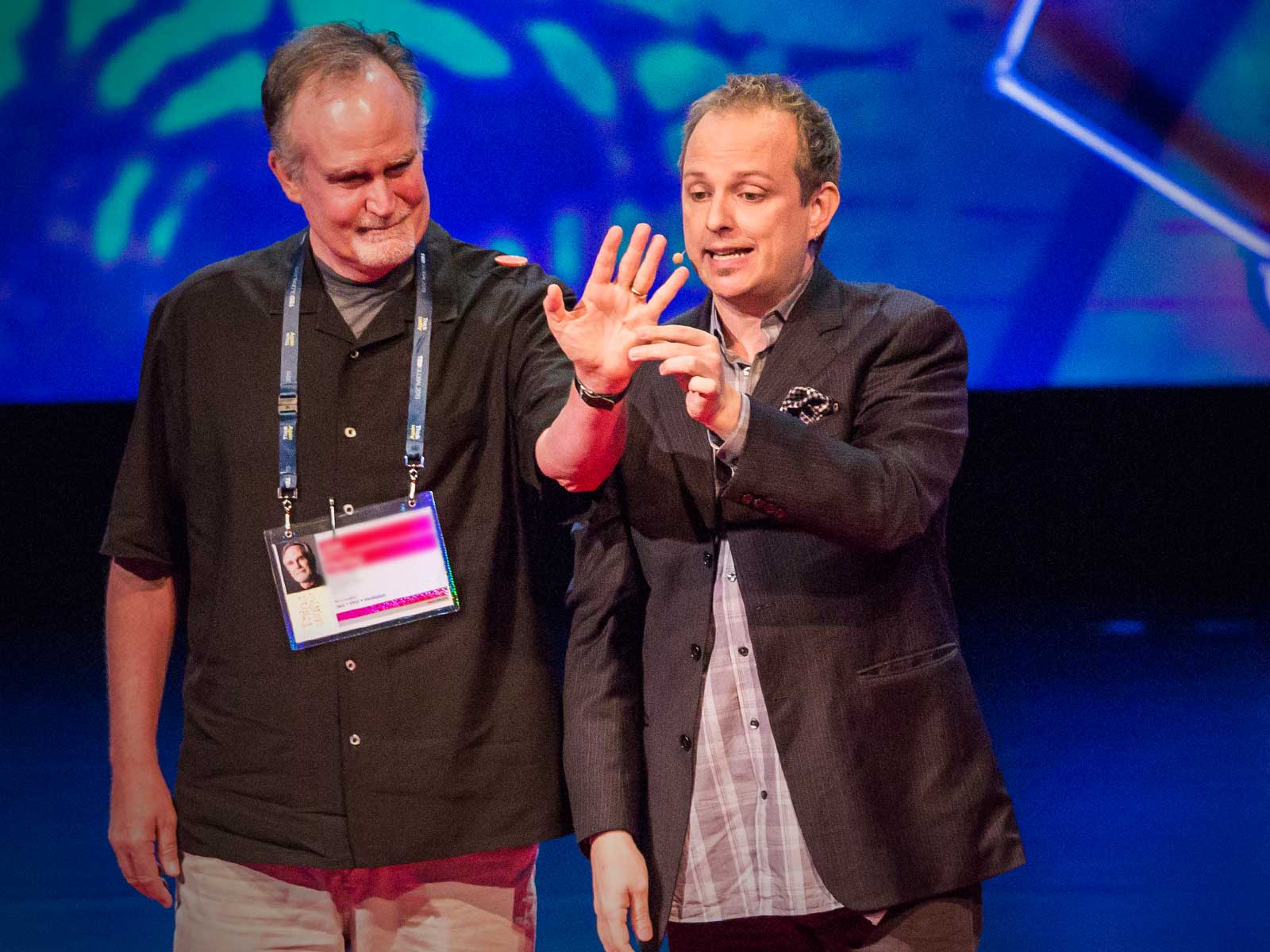
Hailed as the greatest pickpocket in the world, Apollo Robbins studies the quirks of human behavior as he steals your watch. In a hilarious demonstration, Robbins samples the buffet of the TEDGlobal 2013 audience, showing how the flaws in our perception make it possible to swipe a wallet and leave it on its owner’s shoulder while they remain clueless.
Hubble captures interacting and merging galaxies, showing how gravitational encounters distort their shapes and trigger intense star formation.
Credit: ESA/Hubble (M. Kornmesser & L. L. Christensen)
Stress. It makes your heart pound, your breathing quicken and your forehead sweat. But while stress has been made into a public health enemy, new research suggests that stress may only be bad for you if you believe that to be the case. Psychologist Kelly McGonigal urges us to see stress as a positive, and introduces us to an unsung mechanism for stress reduction: reaching out to others.
The first Eyes on the Skies special reviews how telescopes transformed humanity's view of the heavens and opened new windows on the Universe.
Credit: ESA/Hubble (M. Kornmesser & L. L. Christensen)